
Homeowners Insurance Wildfire: A Complete Guide
Get practical tips for comparing homeowners insurance wildfire quotes, understanding coverage, and finding the right policy for your high-risk property.

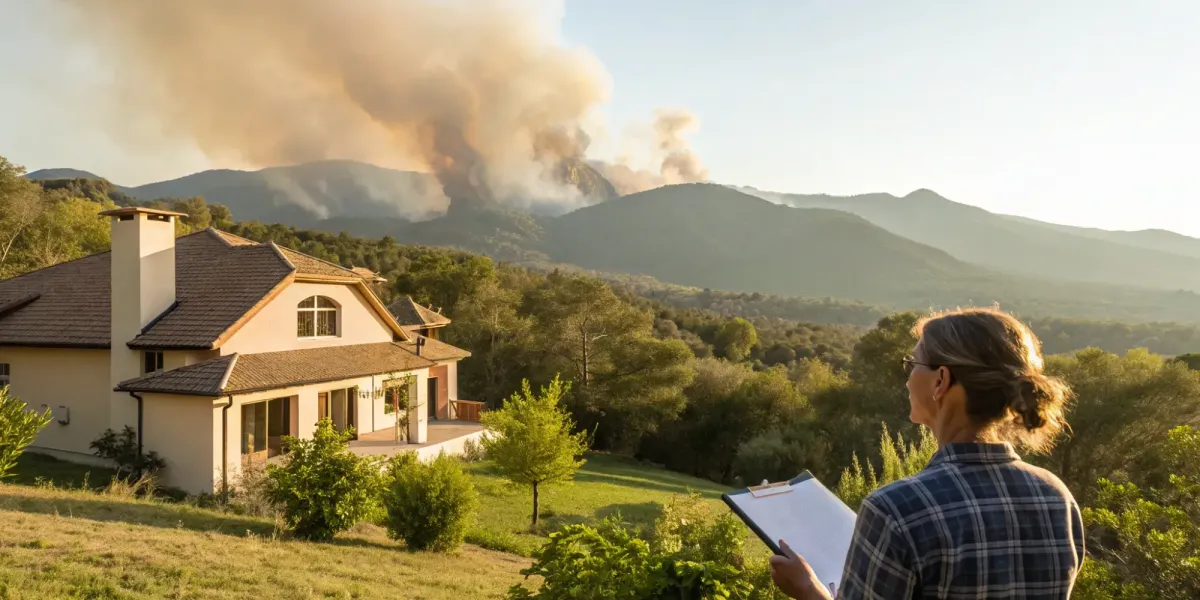
It's easy to feel like your insurance premium is a number that just happens to you, especially in a wildfire-prone region. But you can directly influence that number. Taking proactive steps to protect your property doesn't just offer peace of mind—it makes your home a better risk in an underwriter's eyes. This guide is your roadmap to securing affordable homeowners insurance wildfire coverage. We’ll cover the most effective ways to harden your home, create defensible space, and document your efforts. This preparation is your greatest asset when comparing quotes, helping you find a policy you can feel good about.
Key Takeaways
- Proactive home protection is your best leverage: The steps you take to harden your home and create defensible space are not just for safety—they are the most powerful tools you have for improving your insurability and securing better rates from providers.
- Focus on replacement cost, not market value: A solid policy must cover the full cost to rebuild your home with modern materials, which is often much higher than its sale price. Confirm your dwelling coverage reflects today's construction costs to avoid a major financial shortfall after a fire.
- Your insurance partner matters as much as your policy: In a high-risk area, an independent agent who partners with specialty insurers can uncover options you won't find on your own. They can help you compare complex policies and find coverage that truly fits your property's unique needs.
How Wildfires Change Your Homeowners Insurance
If you live in a wildfire-prone area, you already know that finding homeowners insurance isn't as straightforward as it is for your cousin in the suburbs. It’s a completely different landscape, filled with unique rules, higher costs, and a lot more questions. Understanding why it’s so different is the first step toward finding a policy that truly protects your home and gives you peace of mind.
Insurers aren't trying to make your life difficult; they're managing a much higher level of risk. For them, a home in a high-risk fire zone represents a significant financial gamble. This reality shapes everything from the price you pay to the type of coverage you can get. Let’s break down what makes insuring a home in a wildfire zone a unique challenge.
The Growing Risk of Wildfires
It’s not just your imagination—wildfires are becoming more frequent and destructive. The data shows a clear trend: over the last decade, the U.S. has seen an average of over 61,000 wildfires annually, with the number climbing to nearly 69,000 in a single recent year. This isn't just a statistic; it's a new reality that directly impacts the availability and cost of your homeowners insurance. For insurers, this heightened frequency means a greater chance of massive payouts, forcing them to re-evaluate which homes they can afford to cover. As a result, homeowners in at-risk areas face a tough market with fewer options and higher premiums, making it more important than ever to understand the factors driving these changes.
Understanding the Wildland-Urban Interface (WUI)
One of the most critical terms in wildfire insurance is the "Wildland-Urban Interface," or WUI. This is the zone where homes and communities press up against undeveloped, wild land. If your home borders a canyon, forest, or even a large area of dry brush, you're likely in the WUI. Insurers pay close attention to this because homes in these areas are on the front lines when a wildfire breaks out, exposed to direct flames and ember storms. Your property's location within the WUI is one of the biggest factors determining your risk level, which in turn influences your ability to get coverage and the price you'll pay for it.
The Impact of Wildfires on Rebuilding Costs
After a wildfire, the cost to rebuild your home is almost always higher than you’d expect. It’s crucial that your insurance policy covers the full replacement cost, not just the market value of your house. With construction and material costs steadily rising, an outdated policy can leave you underinsured. Furthermore, a widespread disaster creates a "demand surge." When an entire neighborhood needs to rebuild simultaneously, the local supply of contractors and building materials can't keep up. This scarcity drives prices for labor and supplies through the roof, potentially pushing your rebuilding expenses far beyond your policy's limits. Regularly reviewing your dwelling coverage is essential to ensure you're protected from this post-disaster inflation.
How Wildfire Risk Affects Your Insurance Costs
It’s no secret that homeowners in areas with high wildfire risk face higher premiums. The reason is simple: there's an increased likelihood of a total-loss claim. Insurance companies base their pricing on risk, and in a fire zone, that risk is front and center. They use sophisticated tools and data to create a wildfire risk assessment for your specific property.
This assessment looks at several key factors. They consider your home's proximity to dense vegetation, the slope of your land (fire travels faster uphill), and even your area's fire history. The materials used to build your home also play a huge role. A home with a wood-shake roof and siding will be seen as much riskier than one with a metal roof and stucco siding. All these elements are plugged into an equation that ultimately determines your premium.
Is Your Standard Homeowners Policy Enough for Wildfires?
Here’s something that catches many homeowners by surprise: a standard homeowners policy might not automatically cover wildfire damage. In high-risk areas, it’s common for insurers to add specific exclusions or limitations for wildfires. You can't just assume you're covered because you have a policy. You need to read the fine print and confirm the details.
This is where working with an agent who understands the local market becomes so important. They can help you find policies that are specifically designed for homes in fire zones. It’s crucial to review your policy documents carefully to ensure you have adequate coverage for potential wildfire-related losses. Don't wait until after a fire to discover a gap in your protection. A thorough review of your policy now can save you from financial disaster later.
Common Wildfire Insurance Myths, Busted
Misconceptions about wildfire insurance are common, and they can be costly. One of the biggest myths is that your policy will automatically cover the full cost of rebuilding your home. Unfortunately, many homeowners discover after a fire that their coverage limits are too low to rebuild completely, especially with today’s high construction costs.
It’s essential to ask your insurance agent direct questions to clarify your coverage. Find out exactly how much is allocated for rebuilding your home, replacing your personal belongings, and covering debris removal. The California Department of Insurance recommends asking these questions proactively. Your dwelling coverage should reflect the current cost to rebuild, not just your home's market value. Being your own advocate and getting clear answers will ensure you have the right protection when you need it most.
What Determines Your Wildfire Insurance Quote?
When you get a homeowners insurance quote, it can feel like the number comes out of thin air. But it’s actually the result of a detailed risk assessment. Insurers look at a wide range of factors to predict the likelihood that you’ll file a claim and how much that claim might cost. For those of us in wildfire-prone areas, this process is even more specific.
Think of it like a puzzle. Your home’s location, the materials it’s built with, the space you maintain around it, and your insurance history are all pieces that fit together to form your final premium. Understanding these pieces is the first step toward finding the right coverage at a fair price. It also shows you where you have the power to make changes that could lower your risk and, in turn, your costs. Let’s walk through the key factors that insurers consider when they’re putting together your quote.
How Your Address Impacts Your Fire Risk
It’s no secret that where you live is one of the biggest factors in your insurance quote. If your home is in an area with a history of wildfires or is close to dense vegetation, insurers see that as a higher risk. Many major insurance companies are becoming more cautious, and as Bankrate notes, some are "stopping new policies or making it harder to get coverage in high-risk areas." This includes looking at things like the slope of your property (fire travels faster uphill) and your access to fire department services. While you can’t move your house, knowing how an insurer views your location helps you understand the foundation of your quote.
Do Your Building Materials Stand Up to Fire?
What your home is made of matters—a lot. An insurer will look closely at your home’s construction to see how well it might withstand a fire. A home with a fire-resistant roof (like composite shingles, metal, or tile) is a much better risk than one with old wood shakes. The same goes for siding; stucco and fiber cement are more resilient than wood. Even your windows play a part—dual-paned windows offer more protection against radiant heat than single-paned ones. Making your home more fire-resistant can directly influence an insurer’s decision and your premium.
Why Defensible Space Matters to Insurers
This is where you have the most control. Defensible space is the buffer you create between your home and the surrounding vegetation. Insurers want to see that you’re actively managing this space. This means clearing away flammable materials like dry leaves, pine needles, and overgrown brush from around your home, especially within the first five feet. It also includes trimming tree branches that hang over your roof and keeping your lawn maintained. Creating a clean, clear area around your home shows insurers that you’re a proactive partner in reducing wildfire risk, which can make a real difference in your ability to get coverage.
How Insurers See Your Home's Risk
You might think insurers just look at a CAL FIRE map to set your rates, but their process is much more complex. According to the California Department of Insurance, companies use their own special wildfire risk models to decide on policies and prices. These models analyze everything we’ve discussed—location, materials, defensible space—and more. The good news is that regulations are pushing these models to reward homeowners for taking safety measures. This means the work you do to harden your home and maintain your property is increasingly being recognized and can directly impact your quote. It’s a clear signal that mitigation efforts are a key part of the insurance equation.
How to Assess Your Home's Wildfire Risk
Before you start shopping for insurance, it’s essential to see your home the way an insurer does. That means getting a clear, honest picture of your property's specific wildfire risk. This goes far beyond your zip code—it involves the construction of your home, the landscape surrounding it, and your area's fire history. Understanding these factors puts you in a much stronger position when you start comparing quotes. It helps you anticipate an insurer’s questions, highlight your home’s strengths, and identify improvements that could make your property more attractive for coverage. Think of this as building the case for your home’s insurability. By taking the time to assess your risk, you move from being a passive applicant to an informed homeowner who is ready to find the best possible protection.
Use Official Maps to Check Your Risk
A good starting point for understanding your general risk level is to consult public resources. Agencies like CAL FIRE produce hazard severity zone maps that show which areas are designated as having a moderate, high, or very high fire risk. However, it's crucial to know that insurance companies do not use these maps to set your rates. Insurers develop their own complex, data-driven models that analyze hyper-local factors like the slope of your land, surrounding vegetation, and road access. So, while official maps are useful for awareness, your insurer is looking at a much more granular, property-specific risk score.
Pinpoint Your Home's Weak Spots
Next, walk your property and look for specific vulnerabilities. This process, often called "home hardening," involves assessing how resistant your home is to embers and flames. Start with the most critical areas. Is your roof made of a fire-resistant material like composite shingles, metal, or tile, or is it a combustible material like wood shake? Are the vents on your attic and foundation covered with a fine metal mesh to block embers? Are your windows single-pane or dual-pane, which offer better resistance to heat? Taking stock of these features helps you understand what an underwriter will see. Making your home more fire-resistant can also help lower your risk of damage if a fire happens.
What's Your Area's Fire History?
Insurers rely heavily on historical data to predict future risk, so it’s wise to understand your area’s past encounters with wildfire. Look into your neighborhood’s fire history by checking local news archives or national databases that track wildfire statistics. Have there been major fires nearby in the last decade? How often have evacuation warnings been issued? This context is a key part of your property’s risk profile. With more than a third of people in the U.S. living in counties at high risk for wildfires, this is a widespread concern. Knowing your local history doesn’t just prepare you for conversations with an agent; it gives you a realistic understanding of the environmental challenges your property faces and why finding the right coverage is so important.
How to Lower Your Homeowners Insurance Premiums
When you live in a high-risk fire zone, it can feel like your insurance rates are completely out of your hands. While you can’t change your home’s location on a map, you have more power than you think to influence your premiums. By taking proactive steps to make your property more fire-resistant, you’re not just protecting your home and family—you’re also making your property a much better risk in the eyes of an insurer.
This process, often called "home hardening," involves a series of upgrades and maintenance tasks that reduce your home's vulnerability to wildfires. Think of it as an investment in both your safety and your financial stability. Insurers are far more willing to offer coverage, and often at better rates, to homeowners who can demonstrate they’ve taken concrete measures to mitigate their risk. From clearing brush to choosing the right roofing material, every action you take can make a tangible difference. Let’s walk through the most effective steps you can start on today.
Create and Maintain Your Defensible Space
One of the most critical factors for protecting your home is creating defensible space. This is essentially a buffer zone you create between your house and the surrounding grass, trees, and wildland. Its purpose is to slow or stop a wildfire from reaching your home and give firefighters a safe area to work.
Start by clearing away flammable materials like dead plants, dry leaves, and pine needles from the 30 feet closest to your home. This includes cleaning out gutters and clearing debris from under decks and stairs. Firewood should be stacked at least 30 feet away from your house. Maintaining this space is an ongoing task, but it’s one of the most effective ways to reduce your wildfire risk and show insurers you’re serious about prevention.
Choose Fire-Resistant Building Materials
The materials your home is built with play a huge role in how it stands up to a wildfire, especially to flying embers, which can travel a mile or more ahead of a fire. Upgrading to fire-resistant materials is a powerful way to harden your home. Your roof is the most vulnerable surface, so if it’s time for a replacement, choose Class A materials like concrete, clay tiles, or metal.
Beyond the roof, consider installing dual-pane tempered glass windows and non-combustible siding like stucco or fiber cement. Don't forget the small details: cover attic and foundation vents with fine metal mesh to keep embers from getting inside. These building material upgrades are significant investments, but they can dramatically improve your home’s insurability.
Install Fire Prevention Systems
While hardening your home helps it resist ignition, active fire prevention systems can provide another layer of defense. These systems can alert you to danger and actively fight back against flames. Simple additions like smoke detectors and fire extinguishers are a must-have for any home.
For more robust protection, you might consider installing an exterior sprinkler system that can douse your roof and the surrounding landscape. It’s also a great idea to talk to your local fire department; they can offer specific advice for your property and may know about local grants that can help offset the cost of these installations. Many insurance companies offer discounts for homes with monitored fire alarm systems, so be sure to mention any systems you have when getting a quote.
Plant a Fire-Resistant Garden
Your yard doesn’t have to be a barren patch of dirt to be fire-safe. Smart landscaping choices can create a beautiful, thriving garden that also helps protect your home. The key is to choose high-moisture, low-resin plants that are less likely to ignite. Swap out flammable plants like juniper, cypress, and pine for fire-resistant options like succulents, lavender, and sage.
You can also use hardscaping features like gravel paths, stone patios, and rock retaining walls to create fuel breaks that interrupt a fire’s path. Proper spacing between trees and shrubs is also crucial to prevent fire from climbing from the ground into the tree canopy. A well-planned, fire-resistant landscape is another clear signal to insurers that your property is a lower risk.
Where to Find Wildfire Homeowners Insurance
Finding the right insurance in a wildfire zone feels less like shopping and more like a high-stakes search for a true partner. If you're feeling frustrated by the process, you're not alone. The insurance landscape is shifting dramatically, especially in states like California, and many of the big, traditional companies are pulling back from areas they deem too risky. This leaves homeowners like you feeling stuck, often with limited and expensive options. This is why it’s so important to understand who you’re working with and what your options truly are.
Your choice of provider isn't just a line item in your budget; it determines the quality of your coverage, the fairness of your premium, and the level of support you'll receive if you ever need to file a claim. It’s about finding a company that understands the unique challenges of living in a fire-prone region and is willing to work with you. Getting familiar with the different types of insurers, from the household names to the specialized experts, is the first step toward taking control of your insurance journey. This knowledge empowers you to ask the right questions and find a policy that offers genuine peace of mind, not just a piece of paper.
Choosing Your Provider: Traditional, Specialty, or Independent
When you start your search, you'll likely encounter three main types of providers. Traditional insurers are the household names you see advertised everywhere. While they offer broad coverage, many are reducing their presence in high-risk fire zones. Specialty insurers, on the other hand, focus specifically on properties that traditional carriers might avoid. They have deep expertise in assessing wildfire risk and can offer tailored policies, though sometimes at a higher cost.
Then there are independent insurance agents. Think of them as your personal insurance shopper. Instead of working for one company, they partner with multiple carriers—including specialty ones—to find the best policy for your specific situation. This approach saves you time and can uncover options you wouldn't find on your own.
What's Covered (and What's Not)
A policy is more than just its price tag. It’s crucial to understand what’s actually covered and, just as importantly, what isn’t. A standard homeowners policy typically covers your dwelling, personal belongings, liability, and additional living expenses if you’re displaced. However, many homeowners discover after a fire that their coverage isn't enough to rebuild completely.
Don't wait for a disaster to find out what your policy entails. Ask your agent to walk you through your coverage limits for rebuilding your home and replacing your belongings. Pay close attention to exclusions, which might include things like landscaping, detached sheds, or the full cost of debris removal. Getting clarity on these details upfront ensures you have the protection you actually need.
Dwelling and Other Structures
The good news is that most standard homeowners policies are designed to cover the physical structure of your home from wildfire damage. This includes the cost to repair or completely rebuild your house if it’s damaged by flames, smoke, or soot. This coverage also typically extends to other structures on your property that aren't attached to your house, like a detached garage, a workshop, or a shed. This is the core of your protection, and it’s essential to ensure your dwelling coverage limit is high enough to cover today's construction costs, not just your home's market value.
Personal Property and Post-Fire Risks
Your policy doesn't just protect the building; it also covers the personal belongings inside. This includes everything from your furniture and electronics to your clothes and kitchenware. If your possessions are destroyed in a fire, this coverage provides the funds to replace them. It’s also important to know that this protection often extends to risks that can occur after a fire has passed. For example, if your home is damaged and unsecured, your policy can cover losses from theft or vandalism that might happen in the chaotic aftermath, giving you a crucial layer of security when you're most vulnerable.
Common Exclusions: Landscaping, Cars, and More
It’s just as important to know what your policy doesn't cover. Homeowners insurance typically excludes damage to your landscaping—trees, shrubs, and lawns are often not covered for wildfire damage. This is because they are considered part of the natural environment and are difficult to value. Similarly, your car won't be covered by your home policy, even if it was parked in your garage when the fire hit. Damage to vehicles is handled by the comprehensive portion of your auto insurance policy, so it’s vital to make sure you have that coverage in place as well.
Special Limits for High-Value Items
While your policy covers your personal belongings, it usually places specific, lower limits on high-value categories like jewelry, art, antiques, and firearms. For example, your policy might cover up to $50,000 in personal property but limit jewelry theft to just $1,500. If you have items that exceed these standard limits, they won't be fully protected. To insure their full value, you’ll need to add a special endorsement or "rider" to your policy. This is called scheduling personal property, and it ensures your most precious items are properly covered.
Coverage for Home-Based Businesses
If you run a business from your home, do not assume your homeowners policy will cover it. Standard policies are designed for personal liability and property, not commercial operations. Any business-related equipment, inventory, or client data stored in your home is typically excluded. Furthermore, if a client were injured on your property, your personal liability coverage would likely not apply. You need a separate business insurance policy to protect your equipment, cover lost income if a fire forces you to close temporarily, and handle any business-related liability claims.
Ask About These Fire Mitigation Discounts
The work you do to make your home more fire-resistant can pay off in more ways than one. Many insurance companies offer discounts for proactive fire mitigation efforts. Creating defensible space, upgrading to fire-resistant roofing and siding, and installing modern sprinkler systems can all potentially lower your premiums. These steps show insurers that you’re actively reducing your property’s risk, which makes you a more attractive customer.
However, don't assume every company offers the same discount. The savings can vary widely, so it’s essential to ask each provider about their specific programs. Be prepared to show proof of your upgrades, like receipts or photos. An agent can help you compare mitigation discounts from different carriers to make sure you’re getting the credit you deserve for your hard work.
Insurance Options in High-Risk Areas
What to Do if Your Policy Isn't Renewed
Getting a non-renewal notice in the mail can feel like a punch to the gut. It’s stressful and can leave you feeling like you’ve run out of options, but I promise you haven’t. This is an increasingly common experience for homeowners in high-risk areas, and it’s not a dead end. The first thing to do is take a deep breath and then get proactive. Your initial step should be to contact your current insurance provider to understand the reason for the non-renewal. Was it a broad decision to pull out of your area, or was it based on something specific to your property? This information is valuable as you begin your search for a new policy. As CAL FIRE advises, there are still ways to get coverage, and this is the perfect time to work with an independent agent who specializes in finding solutions in challenging markets.
FAIR Plans: A Last-Resort Option
If you’ve shopped around and still can’t find a traditional insurance company willing to cover your home, you might hear about your state’s FAIR Plan. The Fair Access to Insurance Requirements Plan is a state-mandated program designed to be an insurer of last resort. It provides a safety net to ensure homeowners in high-risk areas can still get basic protection. However, it’s important to understand that a FAIR Plan is not a replacement for a comprehensive homeowners policy. It typically only covers damage from specific perils like fire, lightning, and internal explosion. It often excludes major risks like theft, personal liability, and water damage, and the coverage limits can be lower while the premiums are higher. Think of it as a foundational piece of coverage, not the whole puzzle.
Supplementing a FAIR Plan with a DIC Policy
Because a FAIR Plan leaves significant gaps in your protection, you’ll need a second policy to create a complete safety net. This is where a "Difference in Conditions" (DIC) policy comes in. A DIC policy is designed to wrap around your FAIR Plan, filling in the missing pieces. It provides coverage for the perils that the FAIR Plan excludes, such as personal liability, theft, and medical payments to others. By combining a state FAIR Plan for fire risk with a DIC policy for everything else, you can build a comprehensive insurance solution that functions much like a traditional homeowners policy. Finding the right DIC policy and making sure it pairs correctly with your FAIR Plan can be complex, which is why working with an agent who understands this two-policy strategy is so important.
How to Compare Wildfire Insurance Policies
Once you have a few quotes in hand, it’s time to look past the premium price and dig into the details. Not all insurance policies are created equal, and the differences become incredibly important when you’re facing a total loss from a wildfire. Comparing policies is about making sure you have the financial support to actually rebuild your home and your life. It’s about finding a partner who will be there for you when it matters most.
Think of it as a checklist for your financial security. You need to know exactly what’s covered, how much the insurer will pay, and what your share of the cost will be. Let’s break down the three most critical components to compare so you can make an informed and confident decision. Getting clear on these points will help you spot the differences between a policy that just checks a box and one that truly protects your family and your biggest asset.
Are Your Coverage Limits High Enough?
Your coverage limit is the maximum amount an insurer will pay for a specific type of loss. It’s crucial to understand these numbers before you sign anything. When reviewing a quote, ask your agent to clearly explain the limits for three key areas: rebuilding your home (Dwelling Coverage), replacing your belongings (Personal Property), and covering temporary housing (Additional Living Expenses). Don’t assume the dwelling coverage is enough. Construction costs can surge after a widespread disaster, so you’ll want to ensure your limit is high enough to cover the current cost to rebuild in your specific area, not just your home’s market value.
What to Know About Deductibles and Replacement Costs
Your deductible is what you pay out-of-pocket on a claim before your insurance coverage begins. A higher deductible often leads to a lower premium, but you need to be sure it’s an amount you could comfortably pay tomorrow. Just as important is understanding how your policy pays out. Most policies offer either Replacement Cost Value (RCV) or Actual Cash Value (ACV). ACV only pays what your property was worth at the time of the fire, factoring in depreciation. Replacement Cost coverage, on the other hand, pays to rebuild your home and replace your belongings with new items of similar quality. For homeowners, RCV is the gold standard for a full recovery.
Key Policy Features and Add-Ons to Consider
Beyond the big-picture numbers like coverage limits and premiums, the real strength of an insurance policy is in its details. For homeowners in wildfire zones, certain features and add-ons, known as endorsements, can be the difference between a smooth recovery and a financial nightmare. These aren't just bells and whistles; they are critical tools designed to address the specific challenges that come with rebuilding after a fire. Understanding these options before you need them is one of the most important things you can do. It ensures your policy is built to handle the realities of a widespread disaster, from surprise rebuilding costs to mandatory code upgrades.
Separate Deductibles for Wildfire Claims
When you live in a high-risk area, you might notice something different in your policy: a separate deductible specifically for wildfire damage. This isn't the same as your standard, all-peril deductible. Instead of a flat dollar amount, a wildfire deductible is often a percentage of your home's total insured value, typically ranging from 1% to 5% or more. This means if your home is insured for $500,000 with a 2% wildfire deductible, you would be responsible for the first $10,000 of a wildfire claim. It’s essential to understand your deductible so you can be financially prepared and avoid any shocking out-of-pocket costs after a fire.
Extended Replacement Cost and Building Code Coverage
Standard replacement cost coverage might not be enough to rebuild your home, especially when a widespread wildfire causes local labor and material costs to skyrocket. This is where an "Extended Replacement Cost" endorsement becomes your financial safety net. It adds a buffer—usually an extra 20% to 50%—on top of your dwelling coverage limit to absorb these unexpected price surges. Another vital add-on is Building Code Coverage. If local building codes have been updated since your home was built, this coverage helps pay for the expensive upgrades required to bring your new home up to current standards, an expense that a basic policy won't cover.
The Importance of an Annual Insurance Check-up
Your homeowners insurance policy shouldn't be a "set it and forget it" document. Your life and your home are constantly changing, and your coverage needs to keep up. An annual insurance check-up is the best way to make sure you're not underinsured. Did you remodel the kitchen or add a deck? Have local construction costs gone up? These are the kinds of updates that require a policy review. A yearly conversation with your agent ensures your coverage limits reflect your home's current value. This is where working with an independent agent really shines; they can provide a personalized review of your policy and shop multiple carriers to make sure your protection is still the right fit.
Don't Forget Living Expense and Debris Removal
If a wildfire makes your home uninhabitable, where will your family go? This is where Additional Living Expense (ALE) coverage is a lifesaver. It helps pay for hotel stays, rent for temporary housing, and even the extra cost of meals while you’re displaced. Check the policy’s ALE limits carefully—some have a total dollar cap, while others have a time limit. Another massive post-fire expense is debris removal, which can easily cost tens of thousands of dollars. Ask if the policy has a separate, dedicated limit for debris removal or if that cost is expected to come out of your main dwelling coverage, which could leave you short on funds for rebuilding.
How to Get and Compare Insurance Quotes
Once you’ve done the hard work of assessing your risk and hardening your home, it’s time to find an insurance policy that reflects your efforts. Shopping for insurance in a high-risk area is an active process. It requires a bit of organization and asking the right questions, but it’s the best way to ensure you’re getting fair value and the right protection. Think of it less as a transaction and more as finding a long-term partner who understands the unique challenges of protecting your home.
What You'll Need to Get a Quote
Before you start requesting quotes, get all your information in order. Think of it as building a resume for your property that highlights its best features. You’ll need the basics, of course—address, square footage, year built—but in a wildfire zone, the details matter. Make a comprehensive list of every fire mitigation measure you’ve taken. Note your Class A fire-rated roof, your ember-resistant vents, and the specific clearance you maintain for your defensible space. Having this documentation ready proves you’re a proactive homeowner and helps the insurer accurately assess your property. It’s also a good idea to create a thorough home inventory of your belongings, which is invaluable for setting coverage limits and simplifying any future claims.
Why You Should Get Multiple Quotes
Don’t just accept the first quote you get, especially in a challenging market. You have options, and comparing them is the only way to know you’re getting the best possible coverage for your money. You can get quotes by contacting insurance carriers directly or by working with an agent. An independent insurance agent can be a particularly powerful ally, as they can source quotes from multiple different companies for you, including specialty insurers you might not find on your own. As a rule of thumb, try to get at least three quotes. This gives you a solid baseline to understand what different carriers are offering and helps you spot the most competitive and comprehensive policy for your situation.
Key Questions to Ask Every Insurance Agent
A low price doesn’t always mean a good deal. To truly compare policies, you need to look past the premium and understand the coverage itself. When you’re speaking with a provider, make sure you get clear answers to these critical questions:
- How much coverage do I have to rebuild my home (dwelling coverage)? Is it based on replacement cost or actual cash value?
- What are the coverage limits for my personal belongings?
- Does the policy include Additional Living Expenses (ALE) if I’m displaced? If so, what are the limits?
- Is debris removal covered, and how much will the policy pay for it?
- What is my deductible for a wildfire claim?
Understanding these details is crucial for making an informed decision. The California Department of Insurance provides excellent guidance on what to look for in a policy before you have to file a claim.
Watch Out for These Policy Red Flags
It’s easy to get overwhelmed by insurance documents filled with technical jargon. But taking the time to understand the fine print now can save you from financial heartbreak later. A cheap policy isn’t a good deal if it leaves you unprotected when you need it most, and not all coverage is created equal. When you’re comparing quotes, it pays to be a bit of a detective. Here are some common red flags to watch for to ensure you’re getting a policy that truly has your back.
How to Tell if Your Coverage is Too Low
A surprisingly low premium can be a major warning sign. While everyone loves a good deal, an unusually cheap policy often means the coverage limits are too low to cover your actual losses. Many homeowners unfortunately discover their policy won't pay enough to fully rebuild their homes after a disaster, especially when local construction costs spike due to high demand. To avoid this trap, get a recent, detailed estimate of what it would cost to rebuild your home from the ground up. Compare that number directly to the dwelling coverage limit in the policy quote. If there’s a big gap, you’re looking at inadequate coverage.
Read the Fine Print: Common Policy Exclusions
The devil is truly in the details of your policy documents. A quote might look solid on the surface, but hidden exclusions can create serious coverage gaps. Does it cover debris removal? What about detached structures like your garage, shed, or fencing? Landscaping can cost a fortune to replace, but it's often excluded or has very low limits. The California Department of Insurance advises homeowners to ask agents to clearly explain the coverage for rebuilding, replacing personal belongings, and paying for additional living expenses (ALE) if you're displaced. Don't just assume something is covered—ask for clarification.
How to Identify an Unreliable Provider
Sometimes the red flag isn't in the policy itself, but in the company offering it. A trustworthy provider will be transparent and patient, ready to answer all your questions clearly and without pressure. Be wary of any agent who seems evasive, rushes you into a decision, or can’t provide straight answers about what is and isn't covered. A reliable insurer should also have a strong financial footing. You can check an insurer's financial strength rating through independent agencies like AM Best. A poor rating could be a sign that the company might struggle to pay out claims after a major catastrophe.
Preparing for a Claim: Creating a Home Inventory
The last thing you want to think about after a disaster is trying to remember every single item you owned. That’s why creating a home inventory before you need it is one of the most powerful steps you can take. It’s your personal proof of ownership, a detailed record that takes the guesswork out of the claims process and ensures you can account for everything you’ve lost. Think of it as the foundation for a smoother, faster, and more accurate insurance settlement. It puts you in control by turning a chaotic and emotional task into a straightforward process of checking items off a list you’ve already prepared.
How to Create a Detailed Inventory
The easiest way to start is to simply walk through your home with your smartphone. Go room by room and take a video, narrating as you go. Open closets, drawers, and cabinets. Mention specific details about items, like the brand of your television or when you bought your sofa. For more valuable possessions like jewelry, art, or electronics, create a separate list with photos, serial numbers, and any receipts or appraisals you have. The goal is to create a list of your belongings that includes what they are, when you bought them, and what they cost. This documentation is your best tool for ensuring you get the full value you're entitled to under your policy.
Store Your Inventory in a Safe, Accessible Place
An inventory list stored on your home computer or in a desk drawer won’t do you any good if it’s lost in the same fire. Your inventory needs to be stored somewhere safe and accessible from anywhere. The best modern solution is to use a secure cloud storage service like Google Drive, Dropbox, or iCloud. Simply upload your videos, photos, and documents there. For important physical papers, like birth certificates, deeds, and a hard copy of your insurance policy, consider a fireproof safe or a safe deposit box at your bank. Having both digital and physical copies stored off-site ensures that your crucial records are protected no matter what happens.
What to Do After a Wildfire
The aftermath of a wildfire is overwhelming. Your first priority is the safety of you and your family, but soon after, the practical steps of recovery will begin. Navigating this process can feel daunting, but you don’t have to do it alone. The key is to take it one step at a time, from safely assessing your property to officially starting your insurance claim. This is the moment when your insurance policy becomes more than just a document—it becomes your roadmap to rebuilding. Having a clear plan of action will help you feel more in control during a difficult and emotional time, ensuring you take the right steps to start your financial recovery.
Safety First: Returning to Your Property
Before you do anything else, you must wait for official clearance from emergency services to return to your property. Even after the flames are out, significant dangers can remain. When you are allowed back, proceed with extreme caution. Look for structural damage like a weakened roof or walls, and be aware of potential hazards from downed power lines or gas leaks. Wear protective gear, including sturdy closed-toe shoes, long pants, and gloves, to protect yourself from sharp debris and other hazards. Your safety is the absolute top priority, so if you have any doubts about the stability of your home, do not enter it until it has been inspected by a professional.
How to Start an Insurance Claim
As soon as it is safe to do so, contact your insurance agent or company to begin the claims process. This first call is critical—it gets the ball rolling on every aspect of your recovery, from arranging temporary housing to scheduling a visit from a claims adjuster. At Five Bays Insurance, we make it a priority to guide our clients through this initial call, ensuring they know exactly what to expect. Be prepared to provide your policy number and a description of the damage. This initial contact officially opens your claim and starts the clock on getting you the support you need to move forward.
Documenting Damage and Filing Your Claim
From the moment you step back on your property, document everything. Take extensive photos and videos of the damage from every possible angle, both inside and out. The more detailed your documentation, the stronger your claim will be. Capture the overall structural damage as well as specific ruined items. This visual evidence is crucial for your claims adjuster. As you move forward, keep detailed records of every conversation you have with your insurance company, including the date, time, and who you spoke with. This meticulous record-keeping will serve as your personal file and can help prevent misunderstandings down the line.
Understanding Additional Living Expenses (ALE)
If your home is uninhabitable, your homeowners policy likely includes Additional Living Expenses (ALE) coverage. This is a critical benefit that helps pay for the extra costs you incur while you’re displaced, such as hotel bills, rent for a temporary home, and even the increased cost of meals. It’s designed to maintain your normal standard of living. Start saving every single receipt for these expenses immediately. This includes everything from laundry services to pet boarding fees. Your policy will have limits on how much it will pay, so be sure to ask your agent to clarify your specific ALE coverage so you can plan accordingly.
Navigating the Claims Process
The insurance claims process can be a marathon, not a sprint, especially after a widespread disaster. It requires patience, organization, and persistence. You will be working closely with a claims adjuster assigned by your insurance company, whose job is to assess the damage and determine the settlement amount. Being prepared and understanding your rights as a policyholder can make the experience much smoother. Remember, you are your own best advocate. Keeping clear records and staying on top of communication will help ensure your claim is handled fairly and efficiently, allowing you to focus on the important work of rebuilding.
Keep Damaged Items as Proof of Loss
It might be tempting to start clearing away debris and throwing out ruined belongings, but it’s vital that you resist this urge. If it is safe to do so, do not dispose of any damaged items until your insurance adjuster has had a chance to inspect them. These items serve as physical proof of your loss. Even if something seems completely destroyed and worthless, it’s part of your claim. Piling damaged contents in one area of your property can be helpful, but don't haul them away. Your adjuster needs to see the evidence firsthand to accurately assess the scope of your personal property claim and ensure you are fully compensated.
Handling Disputes with Your Insurer
In an ideal world, the claims process would be seamless, but sometimes disputes arise. You might feel the settlement offer is too low or that the insurer is downplaying the extent of damage from smoke and ash, which can be incredibly costly to remediate. If you find yourself in this situation, stay calm and organized. Present your detailed documentation—your home inventory, photos, and contractor estimates—to support your position. If you still can’t reach a fair agreement, you have options. You can request a different adjuster, file a complaint with your state’s department of insurance, or consider hiring a public adjuster to represent your interests.
Beyond Insurance: Other Sources of Financial Help
While your homeowners insurance policy is your primary source of funding for recovery, it may not be the only help available. After a major wildfire, various state and federal programs often become available to provide additional support to affected residents. These resources are not meant to replace your insurance settlement but can act as a crucial safety net, helping to cover expenses that your policy might not. It’s worth exploring these options to ensure you’re accessing all the assistance you and your family are entitled to during your recovery.
Federal Disaster Assistance (FEMA)
If the wildfire is declared a major disaster by the president, you may be eligible for assistance from the Federal Emergency Management Agency (FEMA). FEMA provides grants to help with urgent needs that are not covered by your insurance, such as temporary housing, essential home repairs, and other serious disaster-related expenses. It’s important to understand that FEMA assistance is designed to be a supplement, not a substitute, for insurance. You should apply if you have uninsured or underinsured losses, as these grants can provide a critical financial bridge while you await your insurance settlement.
Potential Legal Action for Negligence
In some cases, wildfires are caused by the negligence of a third party, such as a utility company failing to maintain its equipment. If investigators determine that another party is responsible for the fire that damaged your home, you may have the option to take legal action. A lawsuit could help you recover losses that exceed your insurance policy limits, including emotional distress and other damages not covered by insurance. If you suspect this might apply to your situation, it is wise to consult with an attorney who specializes in wildfire litigation to understand your rights and explore your legal options.
Related Articles
- Policy Checkup: Wildfire & High-Risk Coverage
- Wildfire & High-Risk Coverage FAQ
- Get a Quote for Wildfire & High-Risk Home Insurance
- Disclaimers & Disclosures: Wildfire Coverage
- Terms of Service: Wildfire & High-Risk Coverage
Frequently Asked Questions
Will the home hardening work I do actually lower my insurance premium? Yes, it absolutely can. Insurance companies are now using more sophisticated models that can account for the specific risk-reduction measures you take. When you upgrade to a fire-resistant roof, install ember-proof vents, and maintain your defensible space, you are making your home a less risky property to insure. Be sure to document every improvement and ask each provider directly about their mitigation credits or discounts to make sure you get the full benefit of your hard work.
What's the difference between 'replacement cost' and 'actual cash value,' and why does it matter so much? This is one of the most critical details in your policy. Think of it this way: Replacement Cost Value (RCV) provides the money to rebuild your home and replace your belongings with new items at today's prices. Actual Cash Value (ACV), on the other hand, only pays you for what your property was worth the moment before the fire, factoring in depreciation. For a true recovery, RCV is essential, as it gives you the funds to actually become whole again.
My home is in a high-risk area. Can I still get good insurance coverage? Yes, but it often requires a more strategic approach than in other areas. While it’s true that some of the big, traditional insurers have become more cautious, there are still excellent options available through specialty carriers. These companies are experts at evaluating properties in fire zones. The key is to make your home as insurable as possible through fire mitigation and to work with a provider who has access to these specialized markets.
Why can't I just get a policy from one of the big, well-known insurance companies? Many large, national insurers have decided to limit their exposure in regions with a high concentration of wildfire risk. After several years of significant losses, their business models are shifting away from these areas. This market change has created a space for specialty insurers and independent agents who focus specifically on finding workable, fair coverage for homeowners in places that the bigger companies now avoid.
Besides the price, what is the single most important thing to check in a policy? The single most important number to verify is your Dwelling Coverage limit. This is the maximum amount the policy will pay to rebuild your house structure. You need to be certain this amount is high enough to cover the full cost of rebuilding at current labor and material prices, not just your home's market value. After a widespread disaster, construction costs often surge, and being underinsured can leave you unable to fully rebuild.


