
The Essential Guide to California Home Insurance
Find out which areas are hardest to insure and get practical tips for securing California home insurance, even if your zip code is considered high-risk.

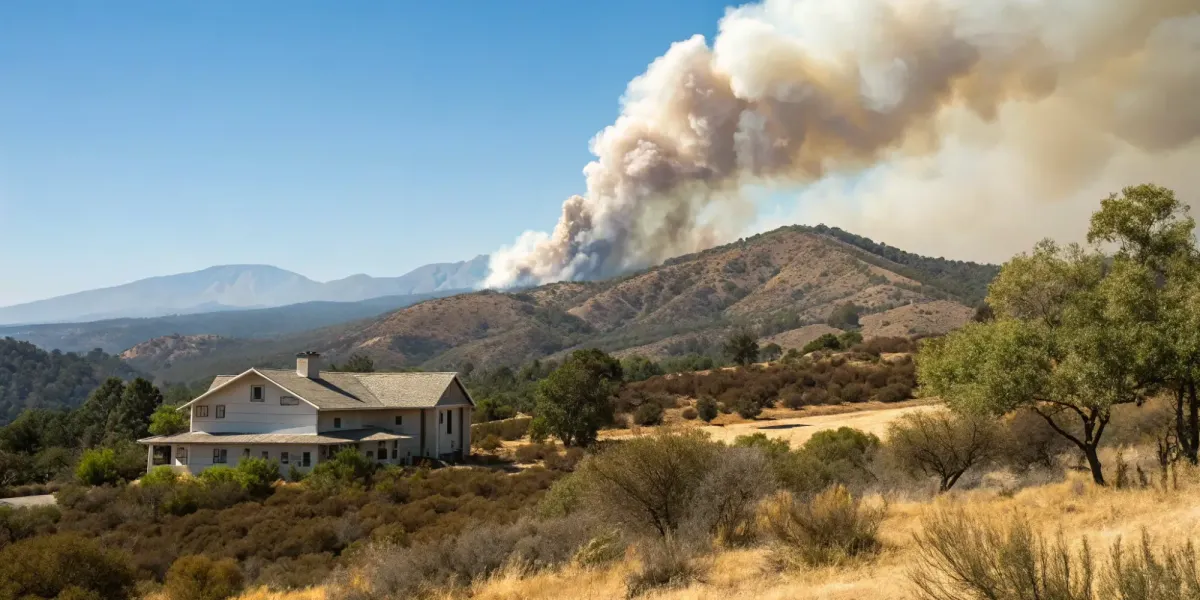
It’s a deeply unsettling feeling to learn the home you’ve worked so hard for is now considered “uninsurable” by major carriers. This isn’t just an inconvenience; it’s a financial and emotional blow that leaves you feeling powerless. In a search for clarity, many homeowners look for a list of uninsurable zip codes in California. But while these lists highlight hotspots, they don’t offer a path forward. The crisis in California home insurance is complex, but finding a solution shouldn't be. We’ll explain what’s happening and give you the actionable strategies you need to protect your family and your home.
Key Takeaways
- It's the market, not you: Major insurers are pulling back from entire regions based on new wildfire risk data, meaning your difficulty finding coverage is part of a statewide trend, not a reflection on you as a homeowner.
- Standard insurance isn't your only choice: If you've been non-renewed, your next steps involve looking into the state's FAIR Plan for basic fire protection or exploring specialty carriers that offer more complete coverage for high-risk homes.
- Work with a specialist to find the right policy: Instead of piecing together coverage on your own, an independent agent who focuses on hard-to-insure homes can connect you directly with specialty carriers and find a single, comprehensive policy.
What Does a Standard California Home Insurance Policy Cover?
When you get a homeowners insurance policy, you’re buying a package of different coverages designed to protect you financially. Think of it as a safety net for your house, your belongings, and even your personal liability. A standard policy is built to handle common risks like fire, theft, and storm damage. It covers the physical structure of your house and other buildings on your property, like a detached garage or shed. It also protects your personal belongings—from your furniture and electronics to your clothes. If a covered event makes your home unlivable, your policy helps pay for temporary living expenses. Finally, it includes liability protection, which is crucial if someone is injured on your property and you’re found responsible.
Core Coverage for Your Home and Belongings
Let’s get into the specifics. A standard California homeowners policy, often called an HO-3, bundles several key protections. The main one is "dwelling coverage," which pays to repair or rebuild your home's structure if it's damaged. You also get coverage for your personal property, though there are often limits on high-value items like jewelry or art. Another important piece is "additional living expenses" (ALE), which covers costs like hotel bills and restaurant meals if you're forced to live elsewhere during repairs. Lastly, "personal liability" coverage steps in to cover legal and medical bills if you're sued for an injury that occurred on your property, giving you essential financial protection against accidents.
What's Often Excluded: Earthquakes and Floods
It’s just as important to know what your policy *doesn’t* cover. In California, standard home insurance policies explicitly exclude damage from earthquakes and floods. Given our state’s geography, these are significant gaps. To protect your home from seismic activity, you must purchase a separate earthquake policy, often through the California Earthquake Authority (CEA). Similarly, flood damage—whether from overflowing rivers or heavy rainfall—requires a separate flood insurance policy, which is typically managed by the National Flood Insurance Program (NFIP). Ignoring these exclusions can leave you financially exposed when disaster strikes, so it's critical to assess your home's specific risks and secure the right additional coverage.
Is Home Insurance Legally Required in California?
This is a common question, and the answer is a little nuanced. The state of California does not legally require you to have homeowners insurance. However, if you have a mortgage on your home, your lender will almost certainly require it. From the lender's perspective, your home is the collateral for their loan, and they need to ensure their investment is protected from catastrophic loss. They will mandate that you maintain a policy for the life of the loan. So, while there’s no state law forcing your hand, for the vast majority of homeowners, insurance is a non-negotiable part of owning a home with a mortgage.
How Much Does Home Insurance Cost in California?
Pinning down the exact cost of home insurance in California is tricky because it depends on a huge range of variables. While you might see statewide averages thrown around, these numbers can be misleading, especially for those of us living in areas with higher wildfire risk. The premium for a home in a dense urban area with low environmental risk will look completely different from one in a rural, fire-prone canyon. The reality is that your final price is tailored specifically to your home, your location, and the amount of coverage you choose. Understanding the factors that insurers use to calculate your rate is the first step toward finding a policy that fits your budget and your needs.
A Look at Average Premiums Across the State
While it's important to take averages with a grain of salt, they can provide a general baseline. Some reports place the average annual premium in California around $1,350 for a policy with $300,000 in dwelling coverage. However, for homeowners in regions identified as high-risk for wildfires or other disasters, this figure is often a distant dream. Premiums in these areas can be several times higher, if coverage is available at all from standard carriers. This growing gap is exactly why many homeowners feel stuck. The "average" experience no longer reflects the reality for a significant portion of the state, making it essential to look beyond headlines and focus on your specific circumstances.
Key Factors That Affect Your Insurance Rate
Insurers look at a long list of factors to determine your premium, all of which are meant to predict your likelihood of filing a claim. Your home’s location is the biggest one, with a heavy focus on its proximity to wildfire-prone areas and its wildfire risk score. They also assess the age and construction of your home—a newer home built with fire-resistant materials will often cost less to insure. The condition of your roof, your claims history, and the safety features you have installed (like smoke detectors or a security system) also play a role. Finally, the coverage limits and deductible you select will directly impact your rate; higher coverage and a lower deductible mean a higher premium.
Where is California Home Insurance Hardest to Find?
If you’ve received a non-renewal notice or struggled to find affordable coverage, you know this problem isn’t abstract—it’s happening right in your neighborhood. While the insurance crisis affects homeowners across the state, certain zip codes have been hit particularly hard. Insurers are using sophisticated risk models to pinpoint areas they consider too risky to cover, leaving many communities with dwindling options. From the canyons of Southern California to the forested hills of the Bay Area, a clear pattern is emerging. Understanding where these high-risk zones are can help you grasp the scale of the challenge and why finding a policy has become so difficult.
Where SoCal Homeowners Are Losing Coverage
Homeowners in Southern California, especially in Los Angeles and Orange counties, have felt the recent market shifts acutely. State Farm, one of the state's largest insurers, announced it would not renew 30,000 homeowner policies across California, with a significant number concentrated in these areas. The decision primarily affects communities with high wildfire exposure, including many affluent hillside neighborhoods. If you live in places like Woodland Hills, La Cañada Flintridge, or parts of Irvine, you may be among those affected. This move is part of a larger trend where insurers are pulling back from areas they deem financially unsustainable due to recurring natural disasters. You can find a more detailed list of zip codes impacted by this non-renewal plan.
Northern California's High-Risk Hotspots
The situation in Northern California mirrors the challenges seen in the south, with wildfire risk driving a widespread insurance retreat. Communities in the Sierra Nevada foothills, wine country, and coastal mountain ranges are increasingly difficult to insure. The combination of dry conditions, dense vegetation, and historical fire data has led insurers to label entire regions as high-risk. This isn't just about a few isolated towns; it's a regional problem affecting countless homeowners. As a result, many residents are facing skyrocketing premiums or outright cancellations, creating a crisis that some experts say is making homes in certain areas "essentially uninsurable." This trend is forcing families to rethink where and how they can live safely and affordably.
Why Bay Area Homeowners Turn to the FAIR Plan
In the Bay Area, many homeowners are finding themselves with only one option left: the California FAIR Plan. This state-mandated pool provides basic fire coverage when you can't find it on the private market. Neighborhoods in Marin, Contra Costa, and Santa Clara counties have seen a dramatic increase in residents turning to the FAIR Plan. The number of policies has more than doubled in recent years, a clear sign that the traditional insurance market is failing to meet demand. While the FAIR Plan offers a safety net, it's far from a perfect solution. It provides less comprehensive coverage than a standard policy and often costs more, forcing homeowners to purchase a second policy for liability and other essential protections. The growing reliance on this "insurer of last resort" highlights the severity of the Bay Area's insurance availability crisis.
Why Is My Home Considered High-Risk?
When an insurance carrier labels a home "high-risk," it’s not a judgment call—it's a business decision based on data. Insurers use sophisticated models to predict the likelihood of a future claim. If their data shows your home has a greater chance of being damaged or destroyed, they classify it as higher risk. This can lead to higher premiums or even a non-renewal notice. Several key factors contribute to this assessment, and understanding them is the first step toward finding a solution. The most significant drivers are your property's location, its proximity to known hazards, and the history of claims in your area.
How Wildfire Risk Impacts Your Insurance
In California, wildfire risk is the number one reason homes are deemed hard to insure. It’s not just about living in a dense forest anymore. Insurers now focus on a home’s position within the Wildland-Urban Interface (WUI), where developed areas meet open, natural land. Recent headlines about major carriers like State Farm canceling policies in certain zip codes show just how seriously they take this threat. They analyze everything from the type of vegetation surrounding your property to the local topography, as these elements can dramatically influence how a wildfire spreads.
Other Factors Beyond Wildfire Risk
While wildfires get most of the attention, insurers are looking at the bigger picture. They assess the overall risk of recurring natural disasters, which can include everything from severe storms to mudslides. If your neighborhood has a history of frequent claims—even for issues unrelated to fire—it can signal to carriers that the area is financially unsustainable for them. It's a tough reality, but your home's insurability is tied to the collective risk of your entire community. Insurers use these sophisticated models to predict future losses, and a pattern of claims can unfortunately put your whole zip code on their high-risk list.
It’s also crucial to understand that your struggle to find coverage is part of a much larger market shift. Major insurance companies are re-evaluating their risk exposure across the entire state, not just in your neighborhood. This means they are pulling back from regions they now see as too risky, a decision driven by their own financial models and reinsurance costs. This statewide trend is why finding coverage has become so challenging, even for homeowners who have never filed a claim. It’s less about you personally and more about a broad, strategic retreat by carriers from what they consider financially unsustainable markets.
Do Past Disasters Still Affect Your Rates?
Insurance is a business of shared risk, and past events heavily influence future pricing. When a catastrophe like a major wildfire strikes a community, insurers pay out millions—or even billions—in claims. To remain solvent, they must adjust their rates to account for that increased risk. According to research on homeowners insurance and climate change, the areas with the highest risk also have the highest "paid loss ratios," meaning insurers pay out more in claims than they collect in premiums. This history of loss makes them cautious about offering coverage in that area again, affecting everyone who lives there.
How Your Address Determines Your Insurance Options
Beyond wildfires, your home’s specific location is critical. Insurers map out zones prone to all kinds of climate-related perils, including floods, landslides, and severe storms. If your home is on a steep slope, in a narrow canyon, or has limited access for emergency vehicles, its risk profile goes up. This isn't just a California problem; extreme weather is causing some insurers to pull back from entire states. As a result, homes in certain parts of the country are becoming "essentially uninsurable" through the standard market, forcing homeowners to seek out alternatives.
Just How Big is California's Insurance Problem?
If you’ve recently received a non-renewal notice or seen your insurance premium skyrocket, it’s easy to feel singled out. But the reality is that California’s home insurance market is facing a systemic challenge that affects homeowners across the state. What was once a straightforward process of securing coverage has become a source of anxiety for countless families. Major insurance carriers are re-evaluating their risk, leading to a wave of policy cancellations and a shrinking number of available options.
This isn’t just a minor market correction; it’s a fundamental shift driven by the increasing frequency and severity of natural disasters, particularly wildfires. The problem extends far beyond a few high-risk canyons. It’s creating financial strain, impacting property values, and forcing homeowners into last-resort coverage plans that often provide less protection for more money. Understanding the scale of this issue is the first step toward finding a viable path forward. It’s not just you—it’s a statewide problem that requires new solutions.
The Statistics Behind the Headlines
The numbers behind California's insurance crisis confirm what so many homeowners are experiencing firsthand. With nearly 1.3 million properties in the state considered at high or extreme risk for wildfires, the scale of the problem is immense. In response, seven of California’s twelve largest insurers have either stopped or severely restricted writing new policies. This massive pullback has created a coverage vacuum, pushing homeowners toward the California FAIR Plan, the state's insurer of last resort. In just a few years, the number of FAIR Plan policies has more than doubled, surging past 370,000. These figures paint a clear picture: the traditional market is failing hundreds of thousands of Californians, forcing them into a safety-net plan that offers less coverage at a higher cost.
Non-Renewals by the Numbers
The data paints a clear picture of a market in retreat. You’ve likely seen the headlines, but the figures behind them are stark. For instance, State Farm announced it would not renew about 72,000 homeowners policies in California, a move that sent shockwaves through communities from Los Angeles to the Sierra foothills. And that’s just one company.
This trend is happening across the board as insurers pull back from areas they deem too risky. These decisions are often concentrated in specific zip codes, but the ripple effects are felt statewide. For homeowners in these regions, a non-renewal notice can feel like a sudden eviction from the traditional insurance market, leaving them scrambling for alternatives. These numbers aren't just statistics; they represent thousands of families facing uncertainty about how to protect their most valuable asset.
The Real Cost for California Homeowners
The shrinking availability of traditional insurance is putting immense financial pressure on California families. When mainstream carriers exit a region, the remaining options are almost always more expensive. Homeowners are often forced to turn to the California FAIR Plan, which offers basic fire coverage but requires a separate, costly policy for liability and other standard protections. This two-policy solution can easily double or triple a household's previous insurance costs.
This financial burden is especially difficult for those on a fixed income, like retirees, who can’t simply absorb a sudden, massive increase in their housing expenses. The stress of finding affordable coverage, or the fear of going without it, is a heavy weight to carry. This crisis is forcing many to make tough decisions about their budgets and, in some cases, whether they can even afford to stay in their homes.
Can Insurance Issues Lower Your Home's Value?
The insurance crisis doesn't just affect your annual budget; it can also impact your home's long-term value. A property that is difficult or extremely expensive to insure is less attractive to potential buyers. Lenders typically require proof of insurance to approve a mortgage, so a lack of accessible coverage can stop a sale in its tracks. This creates a ripple effect that can depress property values across an entire community.
This issue also has broader social consequences, impacting renters, affordable housing developments, and the economic stability of entire regions. As the home insurance crisis grows, it threatens to widen the gap between those who can afford to live in desirable—but high-risk—areas and those who are priced out. Your home is more than just a place to live; it's a critical financial asset, and its value is directly tied to its insurability.
What Are Your Insurance Options Now?
Receiving a non-renewal notice can feel overwhelming, but it doesn’t mean you’re out of options. If you live in a high-risk area, the path to securing coverage looks a little different. It’s all about knowing where to look and understanding the trade-offs of each choice. From state-mandated plans to specialized policies, there are still ways to protect your home. Let’s walk through the primary avenues available to you.
Understanding the California FAIR Plan's Pros and Cons
If you’ve been denied coverage by traditional insurers, you’ve likely heard about the California FAIR Plan. Think of it as a last-resort safety net. The FAIR Plan is a state-mandated program that provides basic fire insurance when you can’t find it elsewhere. While it’s a crucial resource, "basic" is the key word. These policies typically cover damage from fire, lightning, and internal explosions, but that’s it. They often lack the comprehensive protections you’d find in a standard homeowners policy, like liability coverage for accidents on your property, theft protection, or water damage. Many homeowners have to purchase a separate "difference in conditions" policy to fill in these significant gaps.
The FAIR Plan's Limited Scope
The FAIR Plan is designed to be a backstop, not a complete replacement for a standard homeowners policy. Its primary job is to cover your home's structure from specific perils: fire, lightning, and internal explosions. While that provides crucial protection against the biggest threat in many parts of California, it leaves some significant and common risks uninsured. For example, if a guest slips and falls on your property, the FAIR Plan won't cover their medical bills or any potential lawsuits. It also doesn't cover losses from theft or damage from a burst pipe. Think of it as a foundational policy that protects the house itself from fire, but not the full range of liabilities and mishaps that everyday life can bring.
Filling the Gaps with a "Differences in Conditions" Policy
To get the comprehensive protection you're used to, you'll need to pair the FAIR Plan with a second policy called a "Differences in Conditions" (DIC) policy. This policy essentially "wraps around" your FAIR Plan coverage, filling in the gaps. A DIC policy typically adds the essential coverages that are missing, such as personal liability, theft, and water damage. The downside is that you now have two separate policies, two premium payments, and two companies to deal with when filing a claim. This is where working with an independent agent can make a huge difference. A specialist can help you find the right DIC policy to pair with the FAIR Plan or, even better, connect you with a specialty carrier that can offer all the coverage you need in a single, comprehensive policy.
When to Consider Specialty Insurance
Another route is specialty insurance, also known as excess and surplus (E&S) lines. These insurers step in to cover risks that standard carriers won’t take on. For homeowners in high-risk fire zones, specialty carriers can offer policies that are more comprehensive than the FAIR Plan. They have more flexibility in their pricing and coverage terms, allowing them to create policies tailored to unique properties. The main downside is cost. Because they are taking on a greater risk, these alternatives to traditional homeowners insurance almost always come with higher premiums. Still, for many, the peace of mind from having more complete coverage is worth the added expense.
Free Resources from the California Department of Insurance
Feeling lost in the insurance maze is completely normal, but you don't have to figure it all out on your own. The California Department of Insurance (CDI) provides several free tools designed to help homeowners get their bearings. On their website, you can find a number of consumer guides and resources that break down complex policy language and explain your rights. They also offer a Home Insurance Finder tool to help you locate carriers that are actively writing policies in your area. If you’re considering the FAIR Plan, the CDI website has official information to help you understand what it covers. And if you need to speak with someone directly, you can call their Consumer Hotline for personalized assistance with your specific questions.
How We Help in High-Risk Areas
Navigating this landscape on your own is tough. That’s where we come in. At Five Bays, our focus is on helping homeowners in these exact situations. We work with a network of specialty carriers and understand the ins and outs of the California insurance market. Instead of you having to piece together coverage with the FAIR Plan and a supplemental policy, we work to find you a single, more comprehensive solution. We know which carriers are still writing policies in high-risk areas and what it takes to get your home approved. These residual market insurance plans can be a lifeline, and our goal is to make sure you find the best possible protection without overpaying.
Practical Ways to Lower Your Insurance Premiums
Even when your options feel limited, you still have some control over your insurance costs. Finding coverage is the first hurdle, but making it affordable is the next. By taking a proactive approach, you can often find ways to reduce your premium without sacrificing essential protection. These strategies involve a mix of smart shopping, policy adjustments, and home improvements that demonstrate to insurers that you are a lower-risk homeowner. Let's explore a few practical steps you can take to make your policy more manageable.
Shop Around and Compare Quotes Annually
Sticking with the same insurance company year after year might feel easier, but it rarely saves you money, especially in a market as volatile as California's. Insurers constantly adjust their rates and risk models, so the company that offered you the best deal last year may not be the most competitive option today. The California Department of Insurance recommends that you compare different options every time you renew your policy. This is where working with an independent agent can be a huge advantage. Instead of you calling a dozen different companies, we do the legwork, comparing quotes from various specialty carriers to find the right fit for your home and budget.
Bundle Your Home and Auto Policies
One of the most common and effective ways to save is by bundling your policies. Insurance carriers love repeat customers and often provide a significant discount when you purchase more than one type of policy from them, such as combining your home and auto insurance. This streamlines your payments and can lead to substantial savings on both premiums. While not all specialty carriers that cover high-risk homes also offer auto insurance, it’s always worth asking. When a bundling option is available, it can be one of the simplest ways to lower your overall insurance expenses without changing your coverage levels.
Raise Your Deductible
Your deductible is the amount of money you agree to pay out-of-pocket for a covered loss before your insurance coverage begins to pay. By choosing a higher deductible, you are taking on a bit more of the initial financial risk, which in turn lowers your premium. For example, increasing your deductible from $1,000 to $2,500 could reduce your annual premium by a noticeable amount. The key is to choose a deductible that you can comfortably afford to pay on short notice. It’s a direct trade-off: a higher upfront risk for lower regular payments, as noted in this guide to California home insurance.
Ask About Discounts for Home Safety Features
Insurers are all about managing risk, so they are often willing to reward homeowners who take steps to make their properties safer. Installing protective devices can lead to valuable discounts on your premium. This includes standard safety features like centrally monitored smoke detectors, fire alarms, and security systems. For those in wildfire-prone areas, proactive mitigation efforts can also make a difference. While not every carrier offers discounts for things like ember-resistant vents or Class A fire-rated roofing, these upgrades make your home more resilient and, therefore, more attractive to insurers, improving your chances of securing coverage in the first place.
Why Are Big Insurers Pulling Out of California?
If you’ve recently received a non-renewal notice or seen your premiums climb to shocking new heights, you’re not alone. It can feel personal, but the reality is that a massive shift is happening across California’s insurance market. Major national carriers that have been household names for decades are hitting the brakes, limiting new policies, or pulling out of the state altogether. This isn't a reflection on you as a homeowner; it's a business decision driven by a complex mix of risk, cost, and regulation.
For insurers, California represents a huge financial gamble. The increasing frequency and severity of wildfires mean the potential for catastrophic losses is higher than ever. Companies are re-evaluating whether they can remain profitable—or even financially stable—while covering homes in high-risk areas. They are caught between the immense cost of paying out claims after a disaster and the state rules that govern how they operate. This difficult situation has led many to significantly reduce their footprint in the state, leaving countless homeowners scrambling to find coverage. Understanding the reasons behind this exodus is the first step toward finding a viable path forward for protecting your home.
The Balancing Act: Rising Costs vs. State Regulations
At its core, the insurance crisis is a story about money. Recent wildfire seasons have resulted in tens of billions of dollars in insured losses, and insurers are the ones footing the bill. As climate change makes extreme weather more common, the U.S. home insurance industry is in turmoil, especially in states like California. When the cost of paying claims consistently outpaces the premiums collected, the business model becomes unsustainable.
Compounding this issue are California's regulations. The state has rules that limit how insurers can price their policies and how quickly they can adjust rates to reflect new risks. While designed to protect consumers from sudden price hikes, these regulations can prevent insurance companies from charging what they believe is necessary to cover their potential losses. Faced with massive potential payouts and restrictions on their ability to prepare for them, many insurers have decided the risk is simply too great.
Why It's Getting Harder to Qualify for Coverage
In response to these financial pressures, insurers who remain in California are becoming much more selective. They are tightening their underwriting criteria, which means they are scrutinizing properties more carefully than ever before. Factors like your home’s specific location, its proximity to dense vegetation, the age and material of your roof, and your community’s wildfire risk score are all being weighed heavily.
This shift has a direct impact on homeowners, particularly those in areas deemed high-risk. Research shows that homeowners in vulnerable ZIP codes face significantly higher policy nonrenewal rates than those in safer locations. This isn't just an isolated trend; it's a widespread market correction that is fundamentally changing who can get traditional insurance and at what price. As the private market shrinks, more and more residents are left with fewer options, often turning to last-resort plans out of necessity.
What's Next for California Home Insurance?
The California home insurance market is at a crossroads, and simply waiting for things to get better isn’t a viable strategy. The good news is that change is happening on multiple fronts. From cutting-edge technology that redefines "risk" to major policy discussions at the state level, the landscape is shifting. Understanding these developments can help you prepare for what’s ahead and find the best path forward for protecting your home.
How Technology is Changing Risk Assessment
For years, insurers relied on broad, outdated methods to assess risk—often painting entire ZIP codes with the same brush. But as the costs of climate-related events create new challenges, that approach no longer works. Now, the industry is turning to technology like AI, drone imagery, and advanced climate modeling to get a much clearer picture of a single property’s true risk level. This means insurers can look beyond your ZIP code and see the specific details of your home, its surrounding vegetation, and the mitigation efforts you’ve made. While this can feel a bit like Big Brother, it can also be a huge advantage if you’ve taken steps to make your home more fire-resistant, potentially leading to fairer and more accurate pricing.
How Upcoming Reforms Could Affect Your Policy
State regulators are also working to stabilize the market, and big changes are on the table. One of the most significant proposals would allow insurance companies to use forward-looking catastrophe models when setting their rates. In simple terms, this lets them price policies based on future risk, not just past losses. For homeowners, this is a double-edged sword. It could mean higher premiums for some, but it’s also a key demand from insurers. Making this change could convince carriers to start writing more policies in California again, increasing competition and options. In the meantime, for many homeowners, state-sponsored or residual market insurance plans like the FAIR Plan will continue to serve as a critical, if incomplete, safety net.
The State's Sustainable Insurance Strategy
The state is actively working on a plan called the Sustainable Insurance Strategy, designed to bring insurers back to California and stabilize the market. A key part of this plan is a proposed regulatory change that would allow carriers to use forward-looking catastrophe models to set their rates. For decades, insurers were required to base their pricing only on historical loss data, which they argue doesn't capture the escalating risk from wildfires. This reform would let them use modern climate science to predict future risks, a change they say is necessary to price policies accurately and confidently offer coverage in the state again. It's a major shift in how insurance is regulated in California, aimed at creating a more predictable and functional market for everyone.
What This Means for Insurers and Homeowners
For insurers, this change is a big deal. It gives them the green light to use the advanced tools they’ve been asking for, allowing them to price risk more precisely. For homeowners, the effects of these upcoming reforms will be mixed, especially in the short term. This new approach could lead to higher premiums for properties deemed to be at greater future risk. However, the ultimate goal is to increase competition. By making it more viable for insurers to do business here, the strategy aims to bring more carriers back into the market, giving you more choices beyond the FAIR Plan. The hope is that a healthier, more competitive market will lead to better options and more stable pricing in the long run, ending the cycle of non-renewals and market exits that has left so many homeowners feeling stranded.
Related Articles
- Western US Home Insurance | Wildfire & High-Risk Coverage | Five Bays Insurance Agency
- FAQ: Wildfire & High-Risk Home Insurance
- Get a Quote: High-Risk Home Insurance
- Disclaimers & Disclosures | Five Bays Insurance Agency
- Licenses | Five Bays Insurance Agency
Frequently Asked Questions
Why was my policy cancelled if I've never even filed a claim? It’s incredibly frustrating, but a non-renewal is rarely about your personal claims history. Insurers are making broad decisions based on their total risk exposure in a given area. They use advanced modeling to predict the likelihood of a future catastrophe, like a wildfire, sweeping through an entire zip code or neighborhood. If their data shows your area has become too risky for them to insure profitably, they may pull back from the whole region to reduce their potential losses. It feels personal, but it’s a business decision based on geography, not your track record as a homeowner.
Is the California FAIR Plan my only option now? For many, it can certainly feel that way, but it's not always the only choice. The FAIR Plan is a crucial safety net, but it provides very basic coverage. Before settling, it’s worth exploring the specialty insurance market. These are carriers that specifically cover properties that standard insurers won't. They often provide more comprehensive protection than a FAIR Plan policy. Finding them can be tricky, which is why working with an independent agent who focuses on high-risk properties can open up doors to coverage you wouldn't find on your own.
Can I do anything to make my home less risky and easier to insure? Yes, you absolutely can. Taking proactive steps to make your home more fire-resistant, often called "home hardening," can make a real difference. This includes creating defensible space by clearing brush and flammable vegetation around your property, installing ember-resistant vents, and using fire-resistant roofing and siding materials. While these actions don't guarantee you'll get a policy from a standard carrier, they can make your home much more attractive to specialty insurers who are looking for homeowners who are actively managing their risk.
My home isn't in a forest, so why is it considered a high wildfire risk? Wildfire risk isn't just about living in a dense forest anymore. Insurers now focus on what's called the Wildland-Urban Interface (WUI), which is any area where homes are built near or among open, natural lands. This could be a grassy canyon, a chaparral-covered hillside, or even a large regional park. Embers from a wildfire can travel for miles, so insurers also consider factors like local wind patterns, the slope of your property, and whether there is easy access for emergency vehicles. Your home's overall risk score is a combination of all these elements.
Will the home insurance situation in California ever get back to normal? The market is unlikely to go back to the way it was, but it is adapting. The future of California home insurance will likely involve a combination of factors. New technology is allowing insurers to assess risk on a house-by-house basis rather than by entire zip codes, which could reward homeowners who take steps to protect their properties. At the same time, state regulators are considering policy changes that could encourage more insurance carriers to write policies here again. It's a period of adjustment, and finding stable coverage will mean being more proactive than in the past.


