
How Home Fire Resistance Can Lower Your Insurance
Show your insurer real proof of home fire resistance. Learn which documents and upgrades help you qualify for better insurance rates and stronger coverage.

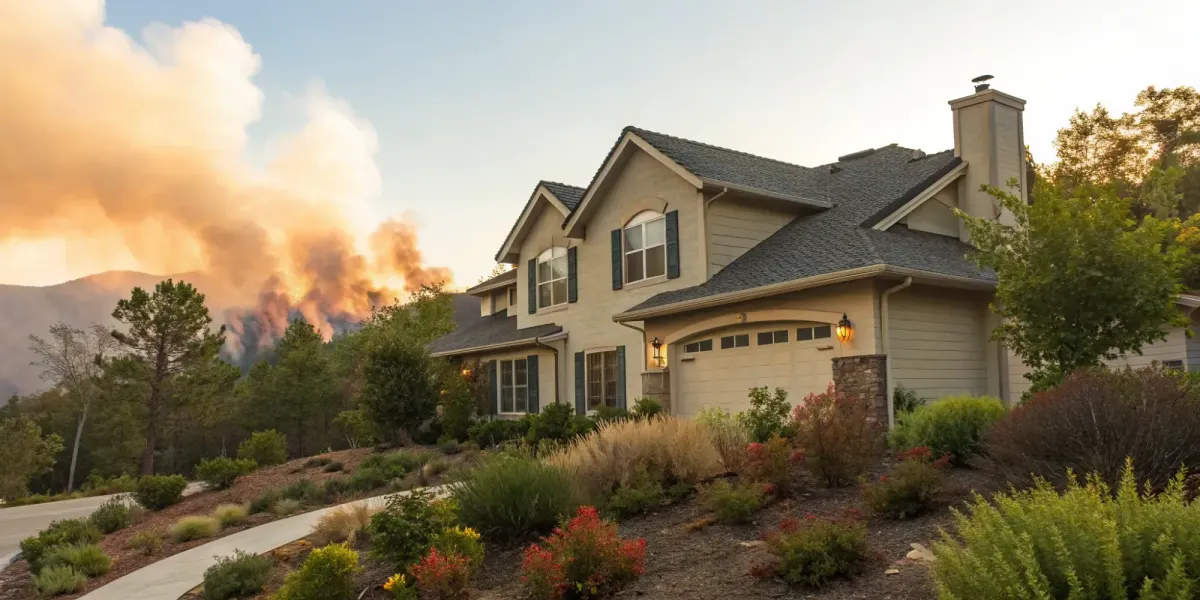
You wouldn't just tell a hiring manager you're qualified—you'd show them your resume. Your home needs the same kind of proof for insurance, especially in a high-risk area. Insurers make decisions based on documented facts, not just your word. That metal roof or stucco siding doesn't count if it's not officially on their records. This is where you build a "resilience resume" for your property. This guide is about compiling the evidence that proves your home fire resistance, turning your application into a top-tier candidate for the coverage you deserve.
Key Takeaways
- Fire Resistance Directly Impacts Your Insurance Risk: Insurers base your premium on risk. By using materials like metal roofing and stucco and maintaining defensible space, you actively reduce the likelihood of a total loss, which can lead to better rates and coverage options.
- Build Your Case with Concrete Proof: Don't just tell your insurer your home is safer—show them. Gather key documents like architectural plans, material certifications, professional inspection reports, and receipts for upgrades to create a comprehensive file that validates your claims.
- Be Proactive in Your Insurance Conversations: Your agent is your partner. Schedule a call to walk them through your documentation, explain the risk-reduction measures you've taken, and formally request a new risk assessment to ensure your policy reflects your home's current, more resilient state.
Understanding How Wildfires Threaten Homes
To build a convincing case for your home's resilience, you first need to understand what you’re up against. The image of a massive wall of fire is what most of us picture, but the reality of how homes are lost in a wildfire is often more subtle. Insurers are focused on the specific vulnerabilities that lead to a total loss, and knowing these weak points is the first step in addressing them. By understanding the primary ways a fire can threaten your property, you can focus your efforts on the upgrades and documentation that truly matter to an underwriter.
The Three Main Threats: Embers, Radiant Heat, and Direct Flames
Wildfires attack homes in three distinct ways. The most obvious is direct flames, where the fire itself makes contact with your house. The second is radiant heat, which is the intense heat thrown off by nearby burning vegetation or structures. This heat can be so powerful that it ignites your home's siding, windows, or deck without ever touching a flame. But the most deceptive threat comes from embers—small, glowing pieces of burning wood and debris that can be carried by the wind for a mile or more. These embers act like tiny sparks, landing on or near your home and looking for any flammable material to ignite.
Why Embers Are the Biggest Culprit
While direct flames and radiant heat are serious dangers, research consistently shows that the vast majority of homes lost in wildfires are ignited by wind-blown embers. According to wildfire safety experts, these small sparks are the main culprit, finding their way into vulnerable spots like attic vents, under decks, or into gutters filled with dry leaves. This is actually good news for homeowners. It means that you don't necessarily need a fortress to survive a wildfire. Instead, focusing on the small details—like installing fine mesh over vents and maintaining a clean, clear area immediately around your home—can dramatically reduce your home's ignition risk and make it a much more attractive property for insurance carriers.
Could a Fire-Resistant Home Lower Your Insurance Bill?
If you live in a high-risk area, you’ve likely heard the term “fire-resistant construction.” But what does it actually mean for your home and your insurance policy? Simply put, fire-resistant construction is a building method that uses specific materials and designs to help a structure withstand fire and prevent flames from spreading. Think of it as building a home with a stronger defense system against embers and heat.
This matters immensely to your insurance provider. When an insurer assesses your home, they’re calculating risk. A home built with materials that can resist fire for a longer period is seen as a much safer bet. It’s less likely to be a total loss in a wildfire, which reduces the potential payout from the insurance company. This is why fire resistive construction) is a key factor in determining your eligibility for coverage and the price you pay for it. For homeowners in places like California, investing in fire-resistant features isn’t just about safety—it’s a critical step toward securing affordable and reliable insurance coverage in a challenging market.
Fire-Resistant vs. Fire-Proof: What's the Real Difference?
It’s important to clear up a common misconception: no home is truly "fire-proof." The correct term is "fire-resistant," and the distinction is crucial. Fire-proof implies a structure is completely immune to fire, which is impossible. Fire-resistant, on the other hand, means the materials and design can slow a fire’s progress.
This is measured using fire resistance ratings, which indicate how long a material can withstand fire before it fails. For example, a wall with a one-hour rating can contain a fire for at least 60 minutes. This built-in delay is designed to give you and your family precious time to evacuate safely and for first responders to arrive and control the blaze.
Why Insurers Love Fire-Resistant Homes
From an insurer’s perspective, everything comes down to risk. A home with a wood shake roof and siding in a high-risk fire zone is a much greater liability than a home with a metal roof and stucco siding. By incorporating fire-resistant features, you are actively reducing the statistical probability of a catastrophic loss.
This proactive approach makes your home a more attractive property to insure. Because these homes are better at withstanding fire, they are seen as less risky, which can directly impact your insurance options. Effective fire protection planning can lead to lower premiums, better coverage terms, and, most importantly, a greater chance of getting approved for a policy in the first place, especially when other carriers are pulling out of your area.
Fire-Resistance Myths: Cost vs. Reality
One of the biggest myths surrounding fire-resistant construction is that it's prohibitively expensive. While some materials may have a higher upfront cost, the long-term financial benefits often outweigh the initial investment. Studies have shown that the costs and benefits of fire-resistant construction are more balanced than many homeowners assume, especially when you factor in lower insurance premiums and increased property value.
Another common belief is that a standard homeowner's policy will cover any fire, so extra measures aren't necessary. While a standard policy does cover fire damage, having fire-resistant features can be the deciding factor in whether you can get coverage at all in a high-risk zone. It can also influence your deductible and premium, making your policy more affordable over time.
What Makes a Home Fire-Resistant?
When we talk about a fire-resistant home, it’s not about creating a structure that’s completely fire-proof—that’s nearly impossible. Instead, the goal is to build a home that can withstand fire long enough to slow its spread, protect the people inside, and give firefighters a crucial window of time to respond. Insurance carriers see this as a major reduction in risk, which is why homes with these features often qualify for better coverage and rates.
A home’s ability to resist fire comes down to its construction, from the big-picture structural components to the small details. It’s about using materials and building techniques that are specifically designed to hold up under extreme heat. This type of construction is often referred to as Fire Resistive Construction) in the insurance world, and it has a formal classification because it’s so effective at preventing catastrophic losses. Understanding what goes into a fire-resistant home is the first step toward proving your property is a lower risk.
Building Materials That Stand Up to Fire
The foundation of a fire-resistant home lies in its building materials. Non-combustible materials are your best defense because they don’t burn when exposed to fire. Think of materials like brick, stone, concrete, and stucco. These are excellent choices for exterior walls because they can contain a fire and prevent it from spreading from the outside in. Metal roofing, such as steel or copper, is another smart choice, as it won’t ignite from airborne embers—a common way wildfires spread from house to house. Even the framing of your home can be made from fire-resistant materials like steel instead of traditional wood, adding another layer of protection from the inside out.
Must-Have Features for Home Fire Resistance
Beyond the raw materials, the way your home is assembled plays a huge role in its fire resistance. According to Verisk, a company that provides data to insurers, a truly fire-resistive structure has specific features. For example, exterior walls should be solid masonry or concrete at least four inches thick. The same standard applies to floors and roofs, which should be made of reinforced concrete of the same thickness. Other important features include dual-paned tempered glass windows, which are less likely to shatter from intense heat, and non-combustible materials for decks and patios. Every component works together to create a home that can effectively stand its ground against a fire.
What Do Fire-Resistance Ratings Mean?
To standardize how well different building components hold up against fire, they are given a fire-resistance rating. This rating tells you how long a material or, more accurately, a complete assembly—like a wall, door, or window—can withstand a fire under controlled test conditions. These ratings are determined by independent laboratories that conduct rigorous fire tests. You’ll see them expressed in minutes or hours (e.g., 20-minute, 60-minute, or 2-hour rating). A door with a 60-minute rating, for instance, is certified to prevent the spread of fire for at least an hour. Understanding what these ratings mean helps you choose the right products and provides concrete proof of your home’s resilience to an insurer.
Creating Defensible Space: The Home Ignition Zone
Think of the area around your home as a protective bubble. This is what fire professionals call the "Home Ignition Zone," and it’s the single most important factor in determining whether your house will survive a wildfire. It’s not about clear-cutting your property; it’s about smart landscaping and maintenance to deny an approaching fire the fuel it needs to reach your doorstep. Creating defensible space is a proven strategy that gives firefighters a chance to defend your home and shows insurance carriers that you are actively managing your risk. It’s divided into three distinct zones, each with its own set of priorities for reducing flammable materials and creating a fire-resistant landscape.
Zone 1: The Noncombustible Zone (0-5 feet)
This is the most critical area, the five feet immediately surrounding your home's foundation and any attachments like decks. Your goal here is to eliminate anything that can burn. This means removing flammable mulch, dead leaves, and dry grass. Instead, use non-combustible materials like gravel, pavers, or concrete. This zone acts as a barrier that can stop a ground fire in its tracks. It’s also vital to trim any tree branches that hang over your roof and remove flammable items stored under decks or next to the house, like firewood piles or patio furniture. An insurer sees a clean Zone 1 as a powerful indicator that your home is well-defended against the primary threat of embers.
Zone 2: The Intermediate Zone (5-30 feet)
In this zone, the focus shifts to creating "fuel breaks" that slow a fire's spread and reduce its intensity. This is where you practice smart landscaping. Keep your lawn mowed and well-watered. Arrange trees and shrubs in small, spaced-out clusters instead of large, dense groups. It’s important to create separation between plants to prevent fire from easily jumping from one to the next. Prune lower branches on mature trees to keep flames from climbing into the canopy. Regularly clear away fallen leaves, needles, and dead wood. This thoughtful maintenance doesn't just make your property look tidy; it creates a landscape that is far less vulnerable to wildfire.
Zone 3: The Extended Zone (30-100+ feet)
This outermost zone is about managing the larger landscape to further reduce a wildfire's energy before it gets close to your home. The objective is to thin out the vegetation, not remove it entirely. You should remove smaller trees and shrubs growing between larger, more mature trees to increase the space between them. Continue to remove dead plant material from the ground and prune trees to keep canopies from touching. By reducing the density of vegetation in this area, you can effectively interrupt a fire's path and decrease the amount of radiant heat that reaches your home, giving it a much better chance of survival.
Hardening Your Home's Structure from Top to Bottom
While defensible space manages the fuel outside your home, "home hardening" is about strengthening the structure itself against fire, particularly from wind-blown embers. Embers are the leading cause of home ignition during a wildfire, as they can travel a mile or more ahead of the main fire front and find their way into the smallest cracks and crevices. Hardening your home involves using fire-resistant materials and sealing up these vulnerabilities. Each upgrade you make contributes to a more resilient structure, which is exactly what insurance carriers want to see when they assess your property's risk. Documenting these features is key to proving your home is a safer bet for coverage.
Roof and Gutters
Your roof is the most vulnerable part of your home during a wildfire. A roof made of combustible materials like wood shakes is a welcome mat for embers. The best defense is a Class A fire-rated roof, made from materials like composite shingles, metal, concrete, or clay tile. It’s also crucial to seal any gaps under roof tiles to block embers from entering the attic. Gutters are another major problem area, as they can fill with flammable debris like dry leaves and pine needles. Regularly clean them out and consider installing metal gutter guards to prevent this buildup, effectively removing a direct line of fire to your roof's edge.
Vents and Eaves
Vents in your attic, foundation, and eaves are necessary for air circulation, but they are also open invitations for embers. To protect these entry points, you should cover all vent openings with a fine metal screen of 1/8-inch mesh. This simple and affordable fix allows air to flow but is small enough to block burning embers from getting inside your home. Eaves should be "boxed in" with non-combustible materials to prevent heat and embers from getting trapped underneath them, which can quickly ignite the roof structure. These small details make a massive difference in your home's overall fire resistance.
Windows and Doors
Intense heat from a wildfire can cause single-pane windows to shatter, allowing embers and flames to enter your home. The best protection comes from dual-paned windows, especially those with tempered glass on the exterior pane, as they provide a much stronger barrier against heat. Metal window frames are ideal, but if you have wood or vinyl frames, you can increase their resistance by covering them with aluminum. For doors, a solid-core wood door offers more protection than a hollow one. Ensure all doors, including the garage door, have tight-fitting seals to prevent embers from blowing in through the gaps.
Siding and Walls
The siding on your home is its first line of defense against radiant heat and direct flames. Wood or vinyl siding can ignite easily, so choosing a non-combustible or ignition-resistant material is a critical hardening measure. Materials like stucco, fiber cement board, brick, and stone are excellent choices because they don't burn. According to the Texas A&M Forest Service, these materials can effectively shield the interior structure of your home from the fire's heat. When building or remodeling, extending this fire-resistant siding all the way to the ground can prevent fire from getting under your home.
Decks, Fences, and Attached Structures
Wooden decks and fences can act like a fuse, carrying fire directly to your house. If you have a wooden deck, ensure there is a five-foot non-combustible zone around it. It's also important to screen in the area underneath the deck with 1/8-inch metal mesh to prevent embers from collecting there. For fences, the most vulnerable point is where they attach to your house. Consider replacing the five feet of fencing closest to your home with a non-combustible material like a metal gate. This creates a simple but effective break that can stop a fire from reaching your exterior walls.
Chimneys and Garages
A chimney can be a direct entry point for embers if it isn't properly protected. You should install a spark arrestor, which is a metal screen that covers the top of the chimney flue. This screen should have openings between 3/8-inch and 1/2-inch to block embers while still allowing smoke to escape. Your garage is another potential weak spot, especially if you store flammable materials inside. Make sure your garage door is weather-stripped along the bottom and sides to create a tight seal. This prevents embers from being blown underneath the door and igniting whatever is inside.
How to Prove Your Home is Fire-Resistant
When you tell an insurance provider that your home is built to withstand fire, they’ll want to see the receipts—literally. Proving your home’s resilience isn’t just about listing its features; it’s about providing concrete, official documentation that validates your claims. Think of it as building a case for your home’s insurability. The stronger your evidence, the more compelling your argument for better rates and coverage options.
Having the right paperwork organized and ready to go shows that you’re a proactive homeowner who takes risk management seriously. This can make a significant difference, especially in high-risk areas where insurers are extra cautious. Your documentation packet should tell a clear story of how your home was constructed, what materials were used, and how you’ve maintained and improved its defenses over time. Below are the key documents you’ll want to gather to build a comprehensive and convincing file for your insurance agent.
Start with Your Architectural Plans
Your home’s original architectural plans and blueprints are the foundation of your proof. These documents are the official record of your home's construction, detailing everything from the wall structure to the roof assembly. For an insurer, this is the primary evidence of whether your home qualifies as a fire-resistive construction). To meet this standard, a home’s essential components—exterior walls, floors, and roof—must be made of non-combustible or slow-burning materials like concrete, brick, or stone. Your blueprints will clearly specify these materials, providing an objective, engineer-approved account of your home’s structural integrity and its ability to resist fire.
Find Material Certifications and Test Reports
Beyond the structural plans, you need proof that the individual components used in your home meet specific fire-safety standards. This is where material certifications and product test results come in. Reputable manufacturers of roofing materials, siding, and windows provide documentation showing their products have passed rigorous, standardized fire tests. These fire-resistance ratings indicate how long a material can withstand fire and prevent heat transfer. Keep these certificates in your file. They serve as undeniable proof that you’ve invested in materials specifically designed to protect your home, moving your property from a theoretical "fire-resistant" category to a documented one.
Get a Professional Inspection Report
A report from a qualified, independent expert adds a powerful layer of credibility to your case. You can hire a certified fire inspector or a wildfire risk assessor to evaluate your property and provide a detailed report. This assessment goes beyond building materials to include other critical factors like the effectiveness of your fire protection systems, the defensible space around your home, and accessibility for emergency services. An inspector’s report provides a current, third-party validation of your home’s overall fire readiness. This professional sign-off can be incredibly persuasive to an underwriter who is weighing the risk of insuring your property.
Document All Maintenance and Upgrades
Fire resistance isn't a one-and-done deal; it requires ongoing effort. That’s why keeping detailed records of all maintenance and upgrades is so important. Did you recently replace your old wood-shake roof with a Class A composite one? Keep the invoice. Do you pay for annual vegetation clearing to maintain your defensible space? Save the receipts. These documents demonstrate your continued commitment to mitigating risk. Making the right fireproofing upgrades can shift your home into a lower-risk category, making you eligible for discounts or even just helping you secure coverage in a tough market. This paper trail proves your home isn’t just safe today—it’s actively being kept safe.
How to Organize Your Fire-Resistance Documents
You’ve invested time and money into making your home safer from wildfires, but how do you make sure your insurance company knows about it? Simply telling them isn’t enough; you need to provide clear, organized proof. Think of it like building a case for your home’s resilience. A strong presentation can make all the difference when it comes to your rates and even your eligibility for coverage, especially in high-risk areas where insurers are becoming more selective.
Insurance underwriters work with data, and providing them with a detailed file of your home’s fire-resistant features gives them the concrete information they need to properly assess your risk—and potentially lower your premium. This isn't about finding a loophole; it's about accurately representing the true risk profile of your property. Many homeowners have already taken significant steps, from installing Class A roofing to maintaining defensible space, but these efforts go unnoticed if they aren't properly documented. The key is to be thorough and professional, showing underwriters that you’ve proactively managed your risk. This process doesn’t have to be complicated. By following a few key steps, you can compile a compelling packet of information that clearly demonstrates the fire-resistant measures you’ve taken. This puts you in a much stronger position when you talk to your agent and gives you the best shot at securing the coverage you need.
Schedule a Professional Assessment
Your first step is to get an expert opinion. Scheduling a professional assessment is crucial to document existing risk mitigation measures and identify any additional steps you can take. A certified wildfire mitigation specialist or a qualified home inspector can evaluate everything from your roofing material to your defensible space. They’ll provide you with an official report that details your home’s strengths and weaknesses. This isn't just about finding problems; it's about getting official credit for the work you've already done. This report becomes the cornerstone of your documentation, providing a credible, third-party validation of your home's fire resistance that an underwriter can trust.
Put Together Your Documentation Packet
With your assessment report in hand, it’s time to build your complete proof packet. Think of this as your home’s resilience resume. A property resilience assessment helps you document all your risk mitigation efforts in one place. Gather all relevant paperwork, including the professional assessment, architectural plans showing fire-resistant designs, receipts for Class A roofing materials, and certificates for fire-rated windows. Don’t forget to include photos and records of ongoing maintenance, like annual gutter cleaning and vegetation management. Organizing these documents into a single, easy-to-review file makes it simple for an underwriter to see the full picture of your efforts and justify a better rate.
Find a Certified Inspector You Can Trust
Who you hire for your assessment matters. While a general contractor might offer an opinion, a report from a certified inspector carries significantly more weight with an insurance carrier. These professionals are trained to recognized standards, and their evaluations are seen as objective and reliable. Collaborating with certified inspectors not only enhances the credibility of your fire resistance claims but also fosters trust with your insurance provider. It shows you’re taking a serious, standards-based approach to risk mitigation. As industry experts point out, building strong relationships with credible professionals improves a homeowner's chances of getting the coverage they need.
Keep Your Records Current
Proving your home’s fire resistance isn’t a one-time task—it’s an ongoing commitment. Just as you would keep maintenance records for your car, you should keep your home’s resilience packet up to date. Every time you complete an upgrade or perform seasonal maintenance, add the receipt, photos, and a note to your file. Remember that fireproofing upgrades can make your property eligible again or help you qualify for better policies. Keeping your records current ensures you’re always ready to demonstrate your proactive stance, especially when your policy is up for renewal. An updated file shows your insurer that your home isn't just resilient today—it will continue to be well-maintained and protected.
How to Talk to Your Insurance Provider
You’ve done the hard work to make your home safer—now it’s time to communicate that value. Approaching your insurance provider with clear documentation and a collaborative mindset can make a significant difference in your rates and coverage options. A prepared, professional approach empowers your agent to advocate on your behalf. Here’s how to structure that conversation for the best possible outcome.
Get Your Documents Ready for Your Insurer
Before you pick up the phone, organize all your proof into a single, easy-to-review packet. The key here is to "document everything" so you can provide a comprehensive overview of every fire mitigation measure you've taken. Include professional inspection reports, material certifications, receipts for fire-resistant landscaping, and clear photos of the upgrades. Having this file ready shows your agent you’re serious and gives them the concrete evidence they need to re-evaluate your policy. A well-prepared homeowner is an insurer's favorite kind of client.
What to Say to Your Insurance Agent
Your agent is your advocate, so treat them like a partner. Instead of just emailing a file, schedule a call to walk them through the changes you’ve made. Explain why you chose specific materials and how each upgrade reduces your home's wildfire risk. Building strong relationships with insurance providers improves your chances of getting favorable terms. This personal touch helps your agent understand the full story, so they can make the strongest possible case for you with the underwriters who ultimately approve your policy.
Request a New Risk Assessment
Your home is not the same property the insurance company originally assessed. After making significant fire-resistant upgrades, you need to formally ask for a new risk assessment. Explain that your mitigation efforts have fundamentally lowered your risk profile and that your current premium doesn't reflect that. Since fire mitigation reduces risk, your old assessment is no longer accurate. This is a necessary step to ensure your policy is based on the most current information about your home’s improved resilience.
Ask About Insurer-Specific Discounts
Don't wait for discounts to be offered—ask for them directly. When you speak with your agent, have a list of your upgrades handy and ask, "What specific discounts are available for these features?" Many insurers offer credits for things like Class A roofing, defensible space, and ember-resistant vents. These fireproofing upgrades can make your property eligible for better rates or even qualify you for coverage you couldn't get before. Be proactive to make sure you get every credit you deserve for protecting your home.
Beyond Your Home: Emergency and Community Preparedness
Making your home physically resilient with fire-resistant materials is a huge step, but true preparedness doesn’t stop at your walls. Insurers and firefighters also look at how your property fits into the bigger picture of emergency response and community safety. Think about it from their perspective: a hardened home is great, but if firefighters can't find it, can't get to it, or have to deal with nearby hazards, its defenses are compromised. This is why demonstrating your preparedness beyond the structure itself is so important. It involves ensuring easy access for first responders, managing potential fuel sources on your property, and actively participating in community-wide safety initiatives. These actions show that you understand risk on a broader level, which can further strengthen your case for being a responsible, insurable homeowner.
Ensure Access for Emergency Responders
In the middle of a wildfire, chaos is the norm and every second is critical. Making your home easy for emergency responders to find and defend can make a life-or-death difference. Start with the basics: make sure your house number is large, reflective, and clearly visible from the street, both on your home and at your driveway entrance. This simple step prevents firefighters from wasting precious time searching for your address. Additionally, you should always prepare and protect your home by having a garden hose connected to an outdoor faucet. This gives first responders an immediate water source to work with the moment they arrive on your property, allowing them to act faster to protect your home.
Manage Your Water Supply and Flammable Materials
Beyond making your home accessible, you need to manage the resources and risks on your property. This means having an adequate water supply ready for firefighting and safely storing anything that could fuel a fire. These two elements—water and fuel—can dramatically alter how a wildfire behaves around your home. By taking control of them, you’re not just protecting your own house; you’re also reducing the risk to your neighbors and the firefighters working to defend the entire community. It’s another layer of proactive risk management that demonstrates your commitment to safety.
Keeping a Water Source Ready
A single connected garden hose is a good start, but you can take your water preparedness even further. Ensure you have hoses long enough to reach every part of your property, including decks, outbuildings, and even the roof. According to CAL FIRE's wildfire home hardening guide, having ample water access is a key part of a home's defense system. If you have a swimming pool, pond, or well, consider installing a pump that can draw from that source. This creates an independent water supply that can be invaluable if municipal water pressure drops during an emergency, giving firefighters a powerful tool to work with.
Safely Storing Flammable Items and Tools
Many everyday items around our homes can become dangerous fuel in a wildfire. It’s essential to store these items safely, far away from your house and other structures. This includes things like firewood piles, propane tanks, and gasoline cans. Keep propane tanks a safe distance from buildings so the valve can be shut off in an emergency, and clear all vegetation around them. The same goes for boats, picnic tables, and other flammable outdoor furniture. By moving these items at least 30 feet away from your home, you create a critical "fuel break" that helps rob an approaching fire of things it can burn.
Leverage Community Wildfire Programs
While individual efforts are vital, there’s incredible power in community action. When an entire neighborhood works together to become more fire-resistant, the collective benefit is far greater than the sum of its parts. Insurers are increasingly taking notice of communities that are organized and proactive about wildfire safety. Participating in established programs not only provides you with expert guidance and resources but also sends a strong signal that your neighborhood is a lower collective risk. Getting involved is a fantastic way to protect your home, support your neighbors, and add another compelling credential to your home’s resilience resume.
Firewise USA®
The Firewise USA® program is one of the most recognized community-level initiatives in the country. It’s a framework that empowers neighbors to work together on wildfire preparedness. By forming a Firewise committee, your community can assess its specific risks and create an action plan for reducing them. This often involves coordinated efforts like neighborhood clean-up days to clear flammable debris and group educational events. Achieving official Firewise recognition demonstrates a sustained, organized commitment to safety, which can be a very positive factor when seeking insurance in a high-risk area.
Ready, Set, Go! Program
The Ready, Set, Go! Program is another excellent resource that focuses on connecting residents with their local fire departments. This program is all about education and action planning. The "Ready" phase involves hardening your home and creating defensible space. The "Set" phase is about creating a personal wildfire action plan for your family, so you are prepared for a potential evacuation. Finally, the "Go!" phase means leaving early when an evacuation is recommended. By participating, you gain invaluable knowledge directly from firefighting professionals, ensuring your preparedness efforts are aligned with expert advice.
How a Fire-Resistant Home Saves You Money
Taking steps to make your home more fire-resistant is about more than just peace of mind—it’s a smart financial move that can directly impact your insurance. When an insurance carrier evaluates your home, their primary goal is to assess risk. A home built with fire-resistant materials and designed with fire safety in mind presents a much lower risk of a total loss.
This reduced risk makes your property more attractive to insurers, especially in areas where they are becoming more selective about the homes they cover. By demonstrating that your home is a safer bet, you can unlock a range of benefits that make your coverage more affordable, accessible, and comprehensive. It’s a proactive approach that puts you in a stronger position when it comes to protecting your biggest asset.
Qualify for Lower Premiums and Discounts
One of the most immediate financial perks of owning a fire-resistant home is the potential for lower insurance premiums. Insurance companies base their pricing on risk; the less likely your home is to suffer major fire damage, the less risk they take on by insuring it. Homes with fire-resistive construction) are seen as less risky, which often translates directly into savings for you.
Many carriers offer specific discounts for features like fire-resistant roofing, sprinkler systems, and creating defensible space. Think of it as a reward for your investment in safety. Effective fire protection planning isn't just about protecting your property—it's a clear strategy for reducing your long-term expenses.
Get Better Coverage with Lower Deductibles
A lower premium isn't the only advantage. Proving your home’s fire resistance can also open the door to better policy terms. Insurers may be willing to offer more comprehensive coverage or lower deductibles for a well-protected home. This means that if you do need to file a claim, your out-of-pocket costs could be significantly less, and your policy might cover perils that would otherwise be excluded.
When your home is less of a risk, you become a more desirable customer. This gives you more leverage and can lead to improved coverage options that provide stronger financial protection. In some cases, these upgrades might even be what helps you qualify for a standard policy instead of a more limited, high-cost alternative.
Get Insured, Even in a High-Risk Area
For homeowners in wildfire-prone regions, simply getting coverage can be the biggest hurdle. As insurers pull back from high-risk areas, many homeowners are left with few, if any, options. This is where a fire-resistant home becomes your greatest asset. By actively reducing your property’s vulnerability, you make it a much more acceptable risk for insurance carriers.
Taking steps to mitigate fire risk can be the deciding factor that keeps you insurable. Some carriers even require mitigation activities for policy renewal in certain areas. Presenting documented proof of your home’s fire-resistant features shows that you are a proactive partner in protecting your property, which can help you secure coverage even when your neighbors are struggling to find it.
Related Articles
- 5 Best Insurance Carriers for Wildfire-Resistant Homes
- Who Offers Premium Reductions for Fire-Resistant Homes?
- 6 Best Insurance Carriers for Wildfire Upgrades
Frequently Asked Questions
Is 'fire-resistant' the same as 'fire-proof'? No, and it’s a really important distinction to make. No home is completely immune to fire, so the term “fire-proof” is a misnomer. Fire-resistant means your home is built with materials and designs that can slow a fire’s spread and withstand heat for a specific amount of time. The goal is to buy precious time for your family to evacuate and for firefighters to arrive.
Can I make my existing home more fire-resistant, or is this only for new construction? You can absolutely make powerful upgrades to an existing home. While building from the ground up offers a clean slate, retrofitting key components can dramatically improve your home's resilience. Simple changes like installing ember-resistant vents or more significant projects like replacing a wood roof with a Class A rated material are effective ways to harden your current home against wildfire.
What's the single most important upgrade I can make for fire resistance? If you have to prioritize one thing, focus on your roof. During a wildfire, thousands of burning embers can travel far ahead of the actual flames and land on your house. Your roof is the most vulnerable surface, so upgrading to a Class A fire-rated material like metal, composite shingles, or tile is the most impactful investment you can make in protecting your home.
Will making these upgrades guarantee I get a lower insurance premium? While there's no universal guarantee, it makes a significant difference. In today’s challenging insurance market, these upgrades can be the key to simply getting approved for a policy in the first place. By providing documented proof of your home’s resilience, you give your insurer the data they need to see your home as a lower risk, which puts you in the strongest possible position for better rates and terms.
Do I really need to hire a professional inspector to prove my home's features? While you can gather receipts and photos yourself, a report from a certified inspector or wildfire risk assessor adds a powerful layer of credibility. An insurance underwriter sees this as an objective, third-party validation of your home’s safety features. It transforms your case from "here's what I say I did" to "here's what a qualified expert has verified," which can be much more persuasive.


